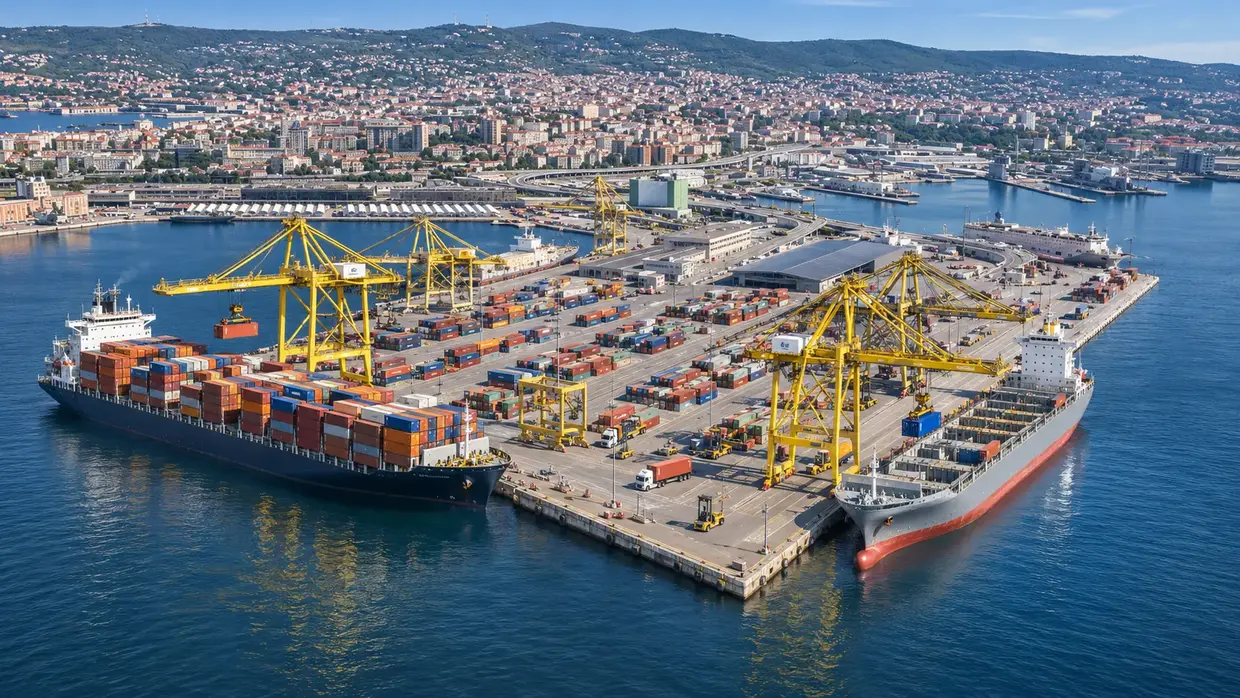
Dobór optymalnego rozwiązania
Pomagamy wybrać usługę z uwzględnieniem rodzaju towaru, kierunku dostawy i specyfiki współpracy.
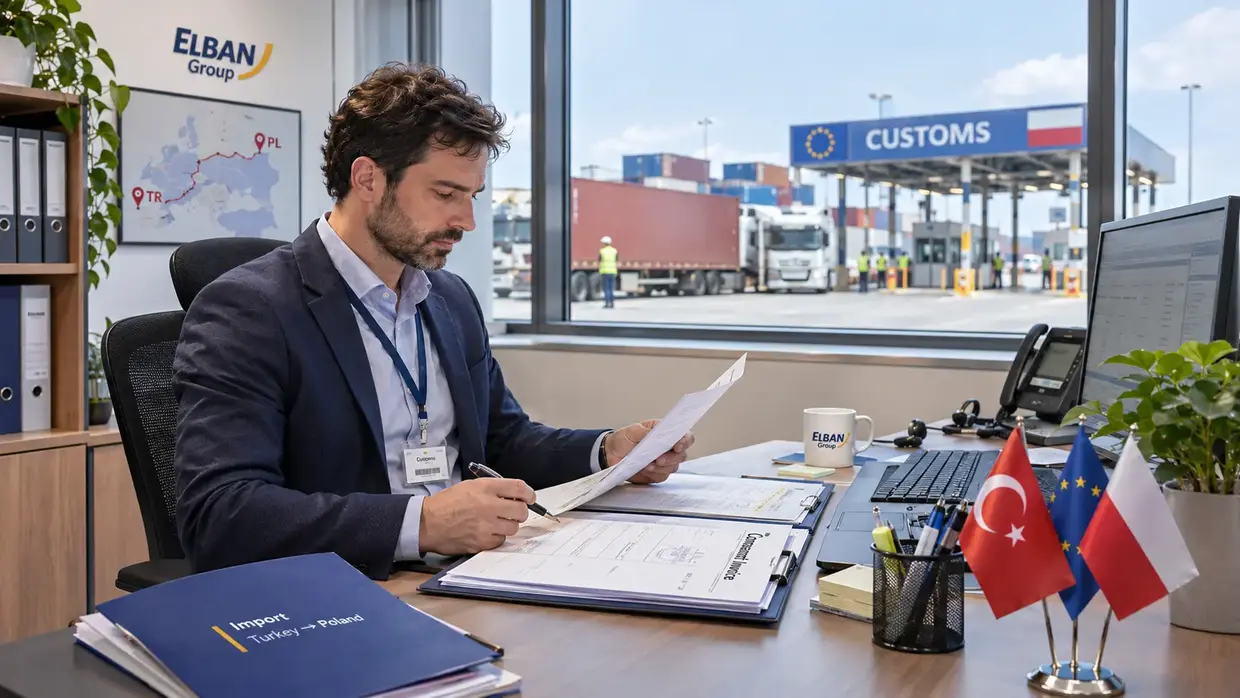
Customs clearance for imports from Turkey differs significantly from clearing goods from China or other third countries. Turkey and the European Union are linked by a customs union that eliminates duties on most industrial goods traded between them. This means that with the correct documentation, many goods from Turkey can enter Poland duty-free, which significantly lowers import costs. ELBAN Group provides comprehensive customs clearance for imports from Turkey, including the preparation of EUR.1 documentation, VAT settlement, and full import customs clearance in Poland.
Contact usNiezależnie od wybranej usługi ELBAN Group pomaga przejść przez cały proces sprawnie, przewidywalnie i z kompleksowym wsparciem na każdym etapie.
Pomagamy wybrać usługę z uwzględnieniem rodzaju towaru, kierunku dostawy i specyfiki współpracy.

Jeden specjalista prowadzi Twoją sprawę od pierwszego kontaktu do zakończenia wszystkich etapów realizacji.

Pomagamy skompletować i zweryfikować dokumenty niezbędne do importu, transportu lub odprawy celnej.

Otrzymujesz jasny zakres prac, niezbędne informacje i dokładny obraz kolejnych kroków.
Незалежно від обраної послуги, ELBAN Group допомагає пройти весь процес ефективно, передбачувано та з комплексною підтримкою на кожному етапі.
Ми допомагаємо обрати послугу з урахуванням типу товару, напрямку та особливостей співпраці.
Один спеціаліст супроводжує ваш запит від першого звернення до завершення всіх етапів роботи.
Допомагаємо зібрати та перевірити документи, необхідні для імпорту, транспортування або митного оформлення.
Ви отримуєте зрозумілий перелік робіт, необхідну інформацію та чітке уявлення про наступні кроки.
Whatever service you choose, ELBAN Group helps you navigate the entire process efficiently and predictably, with comprehensive support at every stage.
We help you choose a service based on the type of goods, destination and specific requirements of our cooperation.
One specialist handles your request from the first enquiry through to the completion of every stage.
We help you collect and check the documents required for importing, transportation or customs clearance.
You receive a clear scope of work, the information you need and a clear understanding of the next steps.

The customs union between the EU and Turkey has been in effect since 1996 and is one of the most important instruments regulating trade between Poland and Turkey. In practice, it means:
Important note: the EU–Turkey Customs Union covers only industrial goods. Agricultural products, food, and textile products under certain quotas may be subject to different rules and duty rates.
A zero duty rate on goods from Turkey applies when two conditions are met simultaneously:
1. The goods originate from Turkey – they must be manufactured or sufficiently processed in Turkey in accordance with EU rules of origin. The mere fact that the goods are shipped from Turkey is not enough – the goods must have Turkish origin.
2. The importer possesses proof of origin – the standard document confirming the Turkish origin of goods is the EUR.1 certificate or an invoice declaration (for shipments valued up to 6,000 EUR).
If any of these conditions are not met – for example, if the goods originate from China but are shipped via Turkey – the standard EU customs duty for that category of goods applies.
The EUR.1 Movement Certificate is a document confirming the preferential origin of goods, issued by Turkish customs authorities at the exporter's request. It is the primary proof required to qualify for zero-duty status when importing from Turkey to the EU.
ELBAN Group verifies that the Turkish supplier has a correctly issued EUR.1 certificate before the goods are loaded. The absence of this document or an incorrectly completed one may result in the Polish customs office charging full duty.
What the EUR.1 certificate should contain:
ELBAN Group verifies the completeness of documentation before the goods arrive in Poland. The standard set of documents for imports from Turkey includes:
To assess your customs clearance requirements and prepare a tailored proposal, we need some basic information about your goods and planned import.
Specify the country where the goods were manufactured and the country they will be shipped from.
Describe the products you plan to import, their intended use, and their main characteristics.
Provide the tariff classification code if you know it. If not, we'll help you determine the next steps.
Provide the approximate shipment value, number of items, and cargo weight or volume.
Let us know whether you have a commercial invoice, packing list, and transport documents.
Indicate whether your goods require certificates, permits, or special customs clearance procedures.
Are you importing from Turkey and need efficient customs clearance? Contact ELBAN Group – we will verify the customs requirements for your goods, check the accuracy of your EUR.1 documentation, and provide comprehensive import customs brokerage in Poland.
Contact us



When importing from Turkey, there are two different preferential documents that should not be confused:
EUR.1 (movement certificate) – confirms that the goods originate from Turkey. Used for goods manufactured in Turkey, it entitles the holder to preferential customs rates or zero duty.
A.TR (movement certificate) – confirms that the goods are in free customs circulation in Turkey (not necessarily manufactured there). It is used within the framework of the customs union, but it does not confirm Turkish origin – therefore, it does not entitle the holder to preferences resulting from rules of origin, but rather from the very fact of free circulation within the customs union.
The correct choice of document depends on the nature of the goods and their origin. ELBAN Group verifies which document is appropriate for a specific shipment.
Despite the customs union with Turkey, imports from Turkey to Poland are subject to import VAT – just like imports from any other non-EU country. The standard import VAT rate is 23% (or a reduced rate for selected categories of goods).
For registered VAT taxpayers in Poland, import VAT is cost-neutral – it can be deducted as input VAT in the tax return. ELBAN Group prepares complete customs documentation to enable the correct settlement of import VAT.
Before leaving Turkey, goods undergo export customs clearance on the Turkish side. This is the exporter's (Turkish supplier's) responsibility, but ELBAN Group coordinates this stage by verifying the completeness of export documents and the accuracy of the issued EUR.1 or A.TR certificate.
Errors in export documentation on the Turkish side can lead to delays or problems during import customs clearance in Poland. Early document verification eliminates this risk.
The process of import customs clearance from Turkey in Poland is similar to that for other third countries:
Most industrial goods from Turkey benefit from zero duty under the EU–Turkey Customs Union, provided that a EUR.1 certificate or an invoice declaration confirming the Turkish origin of the goods is presented.
It is a customs document issued by Turkish customs authorities confirming the Turkish origin of the goods. It entitles the importer to zero or preferential duty rates when importing into the EU.
Yes – despite the zero duty, import VAT (23%) is charged on every commercial shipment from Turkey. For businesses, VAT is cost-neutral and is deductible.
Yes – we handle customs clearance for goods from Turkey regardless of the mode of transport: road, sea, air, or rail.
The goods will be cleared according to the standard EU customs duty rate for the given product category. That is why ELBAN Group always verifies the availability of the EUR.1 document before loading.