Dobór optymalnego rozwiązania
Pomagamy wybrać usługę z uwzględnieniem rodzaju towaru, kierunku dostawy i specyfiki współpracy.

Shipping from China to Ukraine currently requires more flexibility than transport to many other European markets. Goods can reach Ukraine via Black Sea ports or through logistics hubs in the European Union, from where the final leg is completed by truck, rail, or multimodal transport. The choice of route depends primarily on the type of cargo, the pickup location in China, delivery deadlines, connection availability, and the situation along specific transport corridors. Land routes remain highly significant; according to the European Commission, as of June 2026, approximately 70% of Ukrainian imports passed through the EU-Ukraine Solidarity Lanes, while about 30% moved via the Black Sea. These corridors include road, rail, and inland waterway transport through EU countries and Moldova. ELBAN Group organizes transport from China and other Asian countries, tailoring solutions to specific cargo needs. Our scope can include pickup from the supplier, international freight, transshipment, transport to the Ukrainian border, coordination of customs clearance, and delivery to the final address. This allows transport from China to be planned as a single chain, even when multiple modes of transport are utilized in practice.
Request a quoteNiezależnie od wybranej usługi ELBAN Group pomaga przejść przez cały proces sprawnie, przewidywalnie i z kompleksowym wsparciem na każdym etapie.
Pomagamy wybrać usługę z uwzględnieniem rodzaju towaru, kierunku dostawy i specyfiki współpracy.

Jeden specjalista prowadzi Twoją sprawę od pierwszego kontaktu do zakończenia wszystkich etapów realizacji.

Pomagamy skompletować i zweryfikować dokumenty niezbędne do importu, transportu lub odprawy celnej.

Otrzymujesz jasny zakres prac, niezbędne informacje i dokładny obraz kolejnych kroków.
Незалежно від обраної послуги, ELBAN Group допомагає пройти весь процес ефективно, передбачувано та з комплексною підтримкою на кожному етапі.
Ми допомагаємо обрати послугу з урахуванням типу товару, напрямку та особливостей співпраці.
Один спеціаліст супроводжує ваш запит від першого звернення до завершення всіх етапів роботи.
Допомагаємо зібрати та перевірити документи, необхідні для імпорту, транспортування або митного оформлення.
Ви отримуєте зрозумілий перелік робіт, необхідну інформацію та чітке уявлення про наступні кроки.
Whatever service you choose, ELBAN Group helps you navigate the entire process efficiently and predictably, with comprehensive support at every stage.
We help you choose a service based on the type of goods, destination and specific requirements of our cooperation.
One specialist handles your request from the first enquiry through to the completion of every stage.
We help you collect and check the documents required for importing, transportation or customs clearance.
You receive a clear scope of work, the information you need and a clear understanding of the next steps.

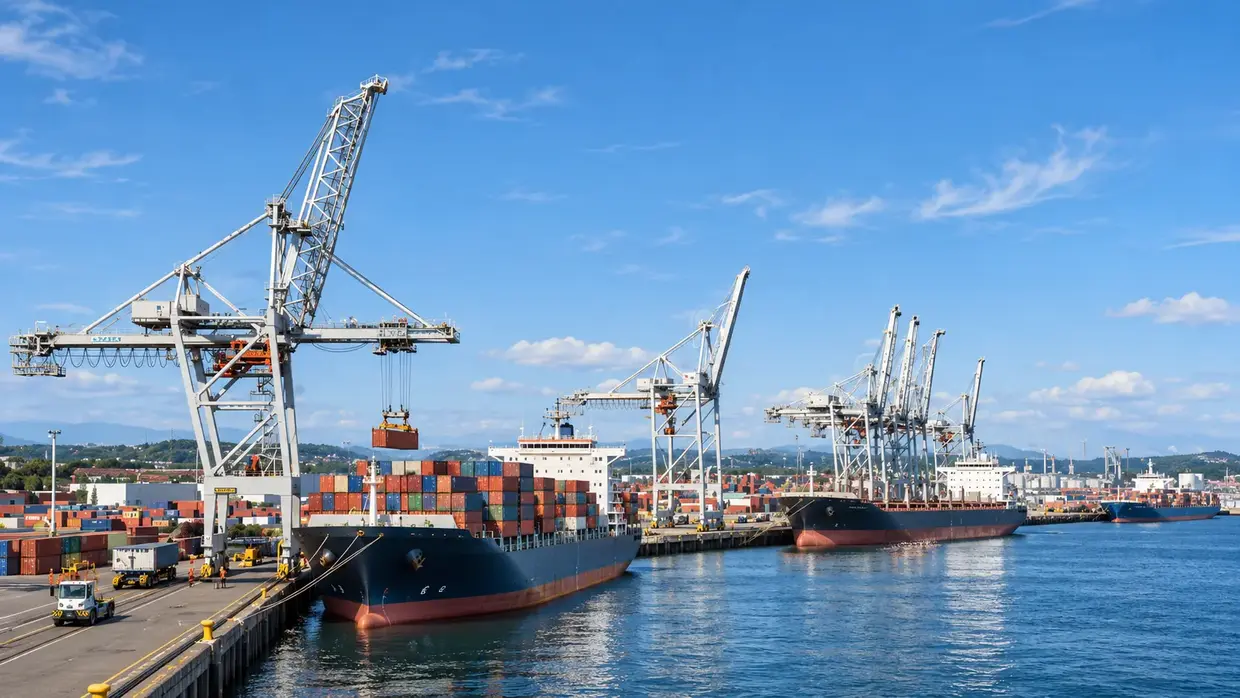
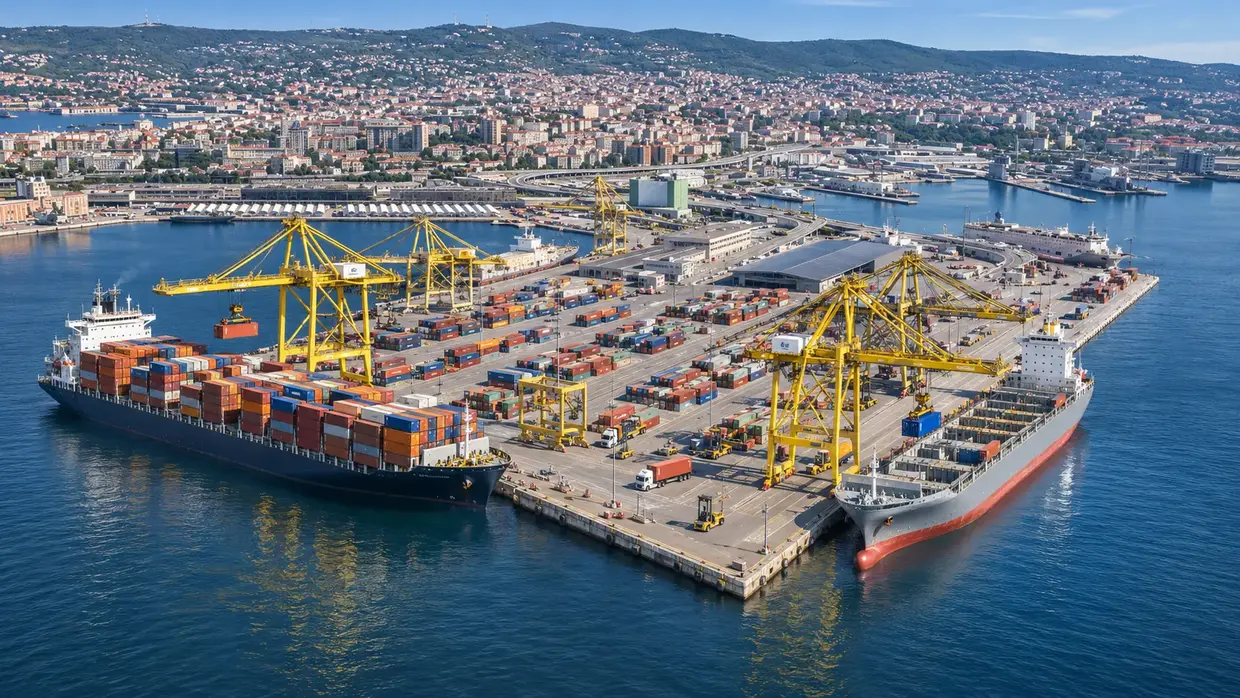
Ocean freight from China and Asia is primarily the solution of choice for larger shipments where transport costs take priority over minimum transit times. It can be used for both full container loads (FCL) and smaller shipments (LCL).
In 2026, Ukrainian ports continue to operate despite wartime threats. The Ukrainian Ministry of Development reported that six ports remained active for import and export operations in 2025: Pivdennyi, Odesa, Chornomorsk, Ust-Dunaisk, Izmail, and Reni. The port of Odesa also handles containers.
At the same time, the sea route should not be viewed as a standard, unchanging service to an EU port. The Ukrainian Sea Corridor remains active, but it operates under conditions of heightened security risk. In July 2026, the Ministry confirmed the continued operation of the Chornomorsk port and the Ukrainian Sea Corridor.
Therefore, for any specific shipment, you should compare at least two options:
The second model can utilize ports and terminals in Poland, Romania, the Baltic states, or the Adriatic region. The Solidarity Lanes corridors were developed specifically to maintain Ukraine's imports and exports through alternative road, rail, and inland waterway connections.
Ocean transit times from China cannot be reduced to a single, fixed number. On Asia-Europe routes, current services may be rerouted, and schedules fluctuate based on geopolitical and operational developments. For instance, DHL's multimodal solutions from Chinese ports to European terminals currently suggest transit times of around 35 to 47 days terminal-to-terminal, depending on the port and route. In addition, final delivery to Ukraine, customs clearance, and any necessary transshipments must also be factored in.
For larger orders, the primary option is FCL, meaning a full container dedicated to a single shipper. This solution reduces the number of operations related to cargo consolidation and deconsolidation.
LCL is ideal for smaller shipments that do not fill an entire container. In this case, goods are consolidated with shipments from other importers. This reduces the transport cost for a single batch, though it may extend the overall process due to additional terminal operations.
That is why, when planning LCL / FCL container shipping from China and Asia, it pays to compare the total delivery cost rather than just the ocean freight rate alone.
Air freight from China and Asia is the ideal solution for high-value goods, production components, spare parts, electronics, samples, and other shipments where speed matters more than transportation costs.
However, there is a fundamental difference between Ukraine and most other European countries. Ukrainian airspace remains closed to civilian flights. The current EASA bulletin regarding Ukraine was extended in July 2026 until January 31, 2027.
In practice, this means that regular commercial air freight from China does not currently terminate at airports in Kyiv or Lviv. The cargo is routed to a suitable hub outside Ukraine and then transported overland to the recipient.
For importers, the total door-to-door time is more important than the flight time itself: pickup from the supplier, export handling in China, the flight, transshipment at a European hub, cross-border transport, customs clearance in Ukraine, and final delivery.
On typical China-Europe routes, air freight alone can take between 4 and 10 days depending on the service type and number of transshipments, but for Ukraine, you must also account for the road segment and border procedures.
Rail freight from China and Asia can serve as an intermediate solution between ocean and air freight. The market offers rail and multimodal connections between China's major industrial hubs and European terminals, available for both FCL and LCL shipments.
When it comes to rail freight from China to Ukraine, however, you shouldn't assume a single, fixed route. Corridor availability depends on the operator, the geopolitical situation, transit restrictions, sanctions, terminal capacity, and current border crossing throughput.
One practical model involves rail transport to a terminal in the EU, followed by transshipment to rail or road transport bound for Ukraine. The European Commission is developing rail connections at Ukraine's borders with Poland, Slovakia, Hungary, and Romania, including infrastructure to better integrate the Ukrainian network with the European 1435 mm track gauge.
That is why rail freight pricing from China and actual delivery times should be calculated for specific points of origin and destination, rather than based on a generic price list.
Full-truckload road freight from China and Asia is a more specialized solution compared to sea or rail transport. It can be utilized for selected cargo types or as part of a larger multimodal supply chain.
More often than not, trucks handle the final leg of the journey: from a European port, airport, or rail terminal to Ukraine.
Road transport is of particular importance for current Ukrainian imports. Solidarity Lanes include connections through Poland, Slovakia, Hungary, Romania, and Moldova, and the infrastructure at road border crossings is being gradually modernized.
For Ukraine, multimodal transport from China and Asia is often more practical than attempting the entire delivery using a single mode of transport.
A sample supply chain might look like this:
China → sea freight → EU port → truck → Ukraine
or:
China → rail → EU terminal → truck / rail → Ukraine.
For urgent shipments, a combination of air and road transport is also possible.
The advantage of this model is the ability to change the entry point into Ukraine if the situation at a port, border, or specific corridor causes delays.
To select the most suitable delivery option and prepare a tailored proposal, we need some basic information about your route and cargo.
Provide the country, city, or address where the goods should be collected.
Specify the country, city, or delivery address in Europe.
Describe the shipment contents and any special transport requirements.
Provide the approximate weight, dimensions, and number of cartons, pallets, or containers.
Let us know when the goods will be ready for collection and when you would like them delivered.
Tell us whether you need customs clearance, cargo insurance, or additional logistics support.
Provide us with details about your cargo, and we will select the appropriate route and transport method, and prepare an individual delivery quote. We provide comprehensive support – from picking up goods in China to delivery to the specified address in Ukraine.
Request a quote
We select available routes through Black Sea ports and European logistics hubs, taking into account the current transport situation.

We compare available transport methods to match delivery costs and transit times to the specifics of your cargo and your company's needs.

We coordinate the preparation of documentation and shipments for customs clearance, ensuring compliance with Ukrainian import regulations.

We manage the entire transport chain – from picking up goods from the supplier in China to delivery to your specified address in Ukraine.
This is one of the most critical decisions when planning shipping from China to Ukraine.
The Black Sea route can reduce the length of the final land transport leg, provided the cargo can be handled by a suitable Ukrainian port and the appropriate service is available.
An alternative is unloading in the EU and continuing transport through one of Ukraine's western borders. This solution increases the number of logistics stages but offers a wider selection of ports, terminals, and connections.
This is not a marginal emergency solution. According to European Commission data, the Solidarity Lanes accounted for approximately 70% of Ukraine's imports in June 2026.
Therefore, before booking, it is worth comparing both options in terms of:
Ukraine is not a member of the European Union, so import clearance is conducted according to Ukrainian customs law rather than the EU's TARIC system.
In the import procedure, foreign goods may be released for free circulation after completing the required formalities and paying the applicable customs duties. The primary method for determining the customs value of imported goods is the transaction value—the price actually paid or payable—adjusted in cases provided for by the Customs Code of Ukraine.
When determining customs value, certain costs related to transport, packaging, or other elements not previously included in the price may also be relevant; therefore, Incoterms and the cost structure should be established before clearance.
The importing business must also be properly registered in the Ukrainian customs system. Customs documents require an identification number assigned by customs authorities in accordance with Article 455 of the Customs Code. Do not automatically apply EU EORI rules to Ukraine.
ELBAN Group can coordinate the logistics process and prepare shipments for clearance, though the scope of formalities must be tailored to the specific goods, the importer, and the chosen delivery model.
Importing goods into Ukraine may be subject to Ukrainian VAT. The standard VAT rate is 20%, although legislation provides for different rates or exemptions for specific categories.
The tax base for imported goods is generally the contract value, provided it is not lower than the customs value, including any applicable customs duties and excise taxes.
Therefore, the total cost of import should not be calculated solely as:
product price + transport.
The calculation may also include:
There is no one-size-fits-all answer to the question of customs duties from China for all products.
The Ukrainian customs tariff is based on the UKT ZED classification. Therefore, the import duty rate depends primarily on the correct commodity code. The Law on the Customs Tariff of Ukraine contains rates assigned to individual UKT ZED headings.
When determining customs duty rates for goods from China, you need to check factors such as:
That is why customs duties on products from China should be determined before shipping—ideally before confirming the order with the supplier. A misclassification can impact both the amount of customs charges from China and the scope of documentation required for clearance.
Goods approved for sale in the European Union are not automatically compliant with every requirement in force in Ukraine.
Ukraine operates a system of technical regulations and conformity assessment. For products covered by relevant regulations, the Ukrainian conformity mark for technical regulations is used. The current Law on Technical Regulations and Conformity Assessment remains in effect in 2026.
Therefore, queries regarding the CE certificate for import from China should be approached with caution. CE marking may be relevant if the product is also intended for the EU market or if specific requirements have been harmonised, but CE on its own should not be treated as a universal permit to introduce any product to the Ukrainian market.
Depending on the product category, before shipment, you must check the relevant technical regulations, required declarations, labeling methods, and any potential need for the involvement of a conformity assessment body.
Queries such as import from China documents and what documents are needed to import from China do not have a single answer for all product categories. A standard set of commercial and transport documents typically includes:
The Customs Code of Ukraine identifies, among others, the contract and invoice as documents used to confirm the declared customs value.
Sanitary, veterinary, phytosanitary, or other permits should not be considered mandatory for every import—they depend on the nature of the product.
Shipping costs from China do not depend solely on distance. Two shipments originating from the same city can have vastly different final costs.
The cost of shipping from China is influenced by factors such as:
Therefore, when comparing offers, it is best to analyze the cost of the entire chain to the specified destination, rather than just the freight for the China-Europe leg.
Transit time from China depends primarily on the chosen shipping method.
Air transport is the fastest, but it currently requires transshipment outside of Ukraine and subsequent road transport. Rail transport can be faster than sea, but its route to Ukraine depends on the current availability of corridors. Sea transport remains cost-effective for large shipments, but the time depends on the service, port of entry, and the final land leg.
When planning, it is not worth assuming a single fixed number of days. Even on Asia-Europe routes, operators change rotations in response to the situation on major lanes, which affects transit times.
ELBAN Group can compare available options for a specific shipment and point out where a difference of a few days justifies a higher cost, and where a sea or multimodal solution would be more cost-effective.
Door-to-door delivery from China simplifies the import process by combining individual stages into a single, seamless logistics workflow.
Depending on the chosen option, it may include:
Given the current structure of Ukrainian transport corridors, the door-to-door model is particularly useful, as a single shipment may be transported sequentially by ship, rail, and truck.
There is no single delivery time that applies to all shipments. Air freight combined with road transport from a European hub remains the fastest option. Rail and multimodal solutions can be an intermediate choice, while sea freight is typically selected for larger shipments with less time pressure. The exact timeframe should be calculated based on the specific city in China, the route, the carrier, and the delivery location.
The price depends on the weight, volume, type of goods, origin and destination, transport method, and current carrier rates. For containers, choosing between FCL and LCL is also a factor. Freight costs may include transshipment, terminal handling, cross-border transport, customs clearance, and import duties. Therefore, an accurate quote requires basic shipment details.
Ukrainian Black Sea ports and the Ukrainian Maritime Corridor are operational, but the availability of specific container services must be verified before shipping. An alternative is to unload the container at an EU port and then transport it to Ukraine by road or rail.
Not via standard commercial cargo. Ukrainian airspace remains closed to civilian flight operations. Therefore, cargo can be flown to a suitable hub outside of Ukraine and then transported by truck to the final destination.
Ukraine has its own system for registering entities for customs purposes. Documentation requires an identification number issued in accordance with Ukrainian customs law. Therefore, an EU EORI number should not be automatically treated as a Ukrainian importer number.
First, you need to determine the correct UKT ZED code for the product. Based on this, you can check the applicable rate in the Ukrainian Customs Tariff, as well as any potential additional measures or exemptions. There is no single customs duty rate for all products originating from China.
Yes, logistics can be arranged as a complete chain from pickup at the Chinese supplier to a specified location in Ukraine. Due to the current transport situation, the route may involve several stages, such as sea freight to a European port followed by road transport to Ukraine, or air freight to an EU hub followed by final delivery by truck.