Dobór optymalnego rozwiązania
Pomagamy wybrać usługę z uwzględnieniem rodzaju towaru, kierunku dostawy i specyfiki współpracy.

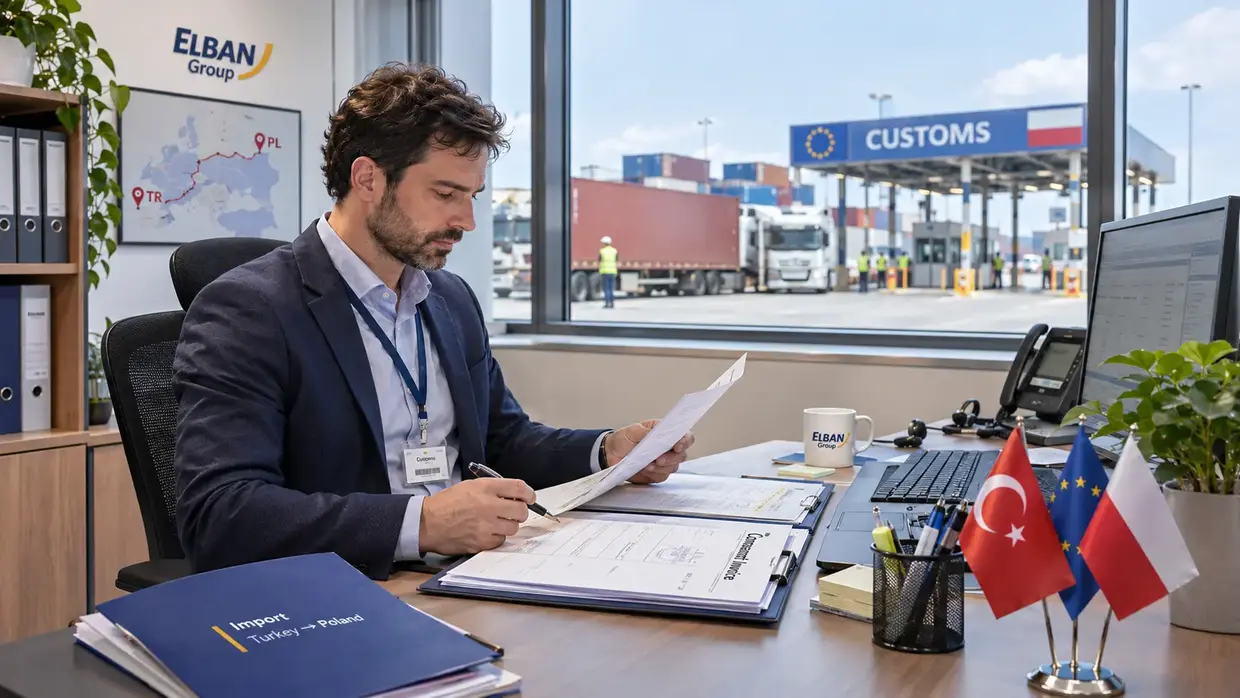
Shipping from China to Poland can be carried out by sea, rail, air, or multimodal transport, utilizing Polish ports, intermodal terminals, and cargo hubs. ELBAN Group organizes the delivery of goods from China to Poland, tailoring the transport method to the type of cargo, its volume, budget, and delivery deadline. We provide comprehensive logistics services – from picking up goods from the supplier in Asia, through organizing international freight, transshipment, and coordinating customs clearance, to delivery to the specified address in Poland.
Request a quoteNiezależnie od wybranej usługi ELBAN Group pomaga przejść przez cały proces sprawnie, przewidywalnie i z kompleksowym wsparciem na każdym etapie.
Pomagamy wybrać usługę z uwzględnieniem rodzaju towaru, kierunku dostawy i specyfiki współpracy.

Jeden specjalista prowadzi Twoją sprawę od pierwszego kontaktu do zakończenia wszystkich etapów realizacji.

Pomagamy skompletować i zweryfikować dokumenty niezbędne do importu, transportu lub odprawy celnej.

Otrzymujesz jasny zakres prac, niezbędne informacje i dokładny obraz kolejnych kroków.
Незалежно від обраної послуги, ELBAN Group допомагає пройти весь процес ефективно, передбачувано та з комплексною підтримкою на кожному етапі.
Ми допомагаємо обрати послугу з урахуванням типу товару, напрямку та особливостей співпраці.
Один спеціаліст супроводжує ваш запит від першого звернення до завершення всіх етапів роботи.
Допомагаємо зібрати та перевірити документи, необхідні для імпорту, транспортування або митного оформлення.
Ви отримуєте зрозумілий перелік робіт, необхідну інформацію та чітке уявлення про наступні кроки.
Whatever service you choose, ELBAN Group helps you navigate the entire process efficiently and predictably, with comprehensive support at every stage.
We help you choose a service based on the type of goods, destination and specific requirements of our cooperation.
One specialist handles your request from the first enquiry through to the completion of every stage.
We help you collect and check the documents required for importing, transportation or customs clearance.
You receive a clear scope of work, the information you need and a clear understanding of the next steps.
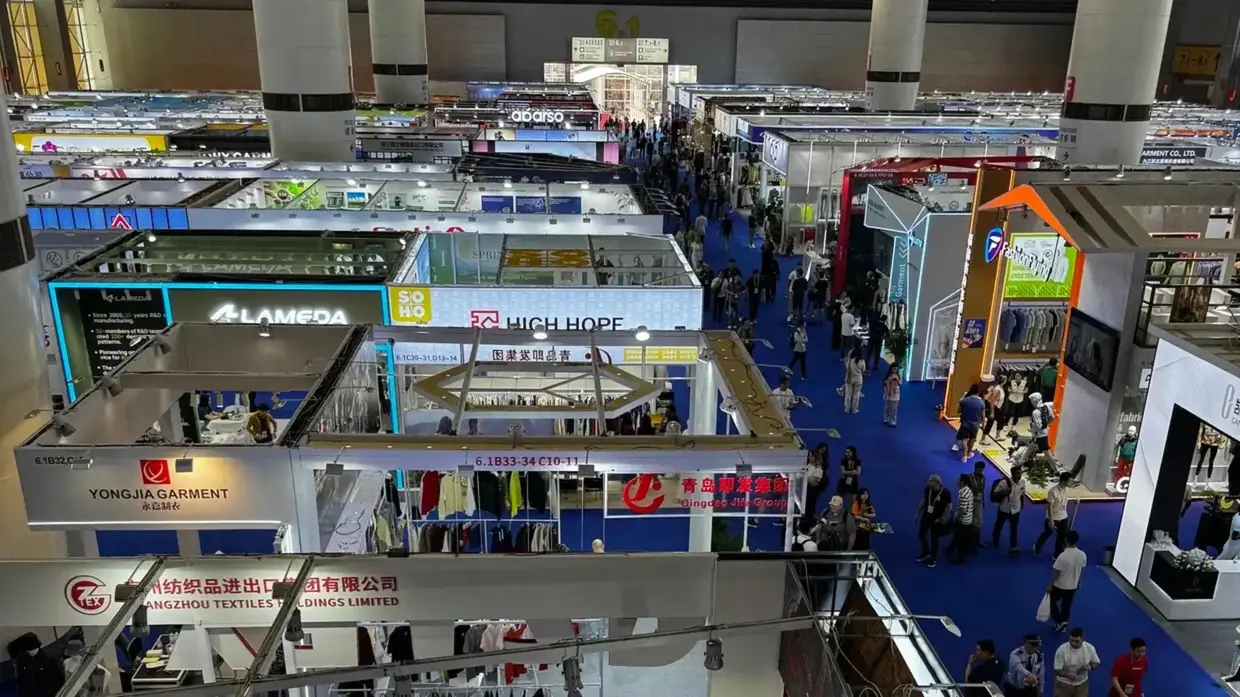
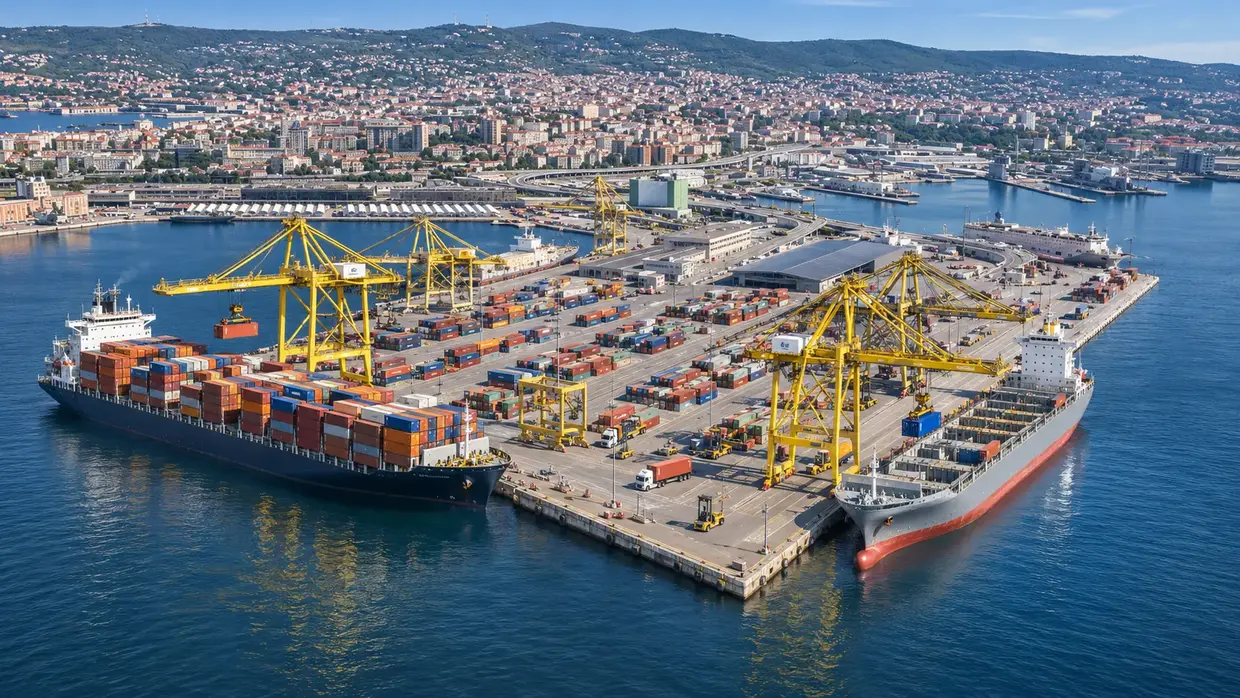
Sea freight from China and Asia is the primary solution for large volumes, especially when unit cost is the priority rather than the shortest delivery time.
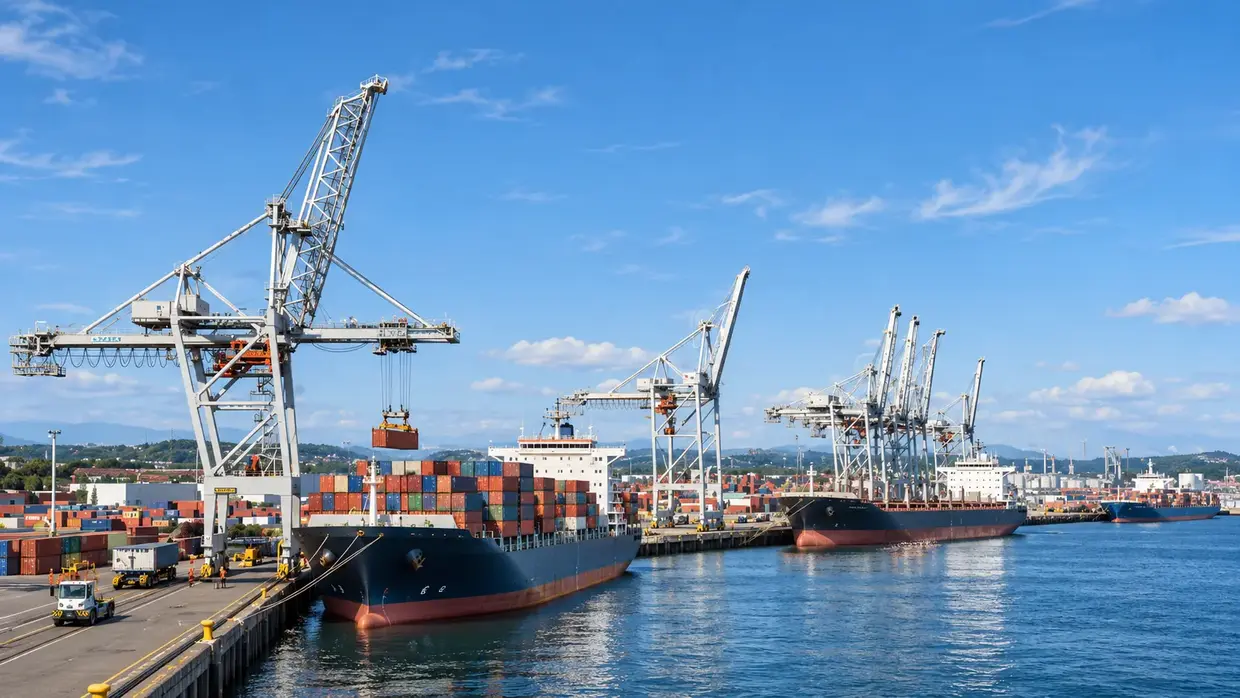
In the case of Poland, Gdańsk is of particular importance. Baltic Hub handles regular ocean freight connections with Asia, and the official Port of Gdańsk map shows weekly container services including Ningbo, Shanghai, Qingdao, Xiamen, Yantian, and Tianjin/Xingang.
This means that sea freight from China to Poland doesn't automatically have to be routed through Rotterdam, Hamburg, or another Western European port. For many shipments, a Polish port can serve as the direct entry point into the EU market.
The Port of Gdynia serves as an alternative. In 2025, it was included in the Britannia ocean service connecting Asia with Northern Europe, which includes Shanghai, Ningbo, and Yantian. In 2026, the port further increased its capacity to handle large container ships thanks to the modernization of BCT infrastructure.
When planning sea freight from China, transit time must, however, be calculated for each specific rotation. Transit duration is influenced by the port of origin, ocean service, number of transshipment calls, current vessel routing, seasonality, and terminal handling times.
LCL / FCL container transport from China and Asia allows you to tailor the shipping method to your order size.
FCL means that a single client uses the entire container. This solution is particularly attractive for larger volumes, as it eliminates the need for cargo consolidation and deconsolidation.
LCL, on the other hand, allows you to ship a few pallets or a smaller batch without paying for a full container. The cargo is consolidated in China with shipments from other importers and separated upon arrival at the destination terminal.
Therefore, when inquiring about a container from China to Poland, you should provide at least:
Only then can you compare whether FCL, LCL, or another method will be more cost-effective.
Air freight from China and Asia is primarily intended for goods where every day counts: electronics, spare parts, production components, samples, high-value products, or urgent orders.
Poland has its own growing cargo infrastructure. A particularly interesting example is Katowice Airport. In the first half of 2026, the airport handled two all-cargo routes from China: Chengdu-Katowice and Nanjing-Katowice. According to the airport, an average of about five such flights were operated per week.
This does not mean, of course, that every air freight shipment from China to Poland will be carried on a direct freighter. Depending on the origin city, the airline, and space availability, cargo may also transit through a European air hub and be delivered to Poland by truck via Road Feeder Service (RFS).
Air freight from China - cost largely depends on the chargeable weight, which is determined by comparing actual weight and volumetric weight. As a result, a small but very light and bulky cargo may cost proportionally more than a compact shipment of similar actual weight.
Rail freight from China to Poland is an attractive option for companies looking for a middle ground between sea and air shipping. Logistics operators continue to offer FCL and LCL rail transport between China and Europe, but the exact routing must be verified for each specific shipment.
Poland plays a key role in this system due to its infrastructure on the EU's eastern border. In Małaszewicze, terminals are being developed to handle rail-to-rail and rail-to-road transshipment, as well as to accommodate different track gauges. The project for the new intermodal terminal is located approximately 10 km from the Terespol-Brest border crossing.
At the same time, the rail route from China to Poland should not be seen as a single, static corridor. Service availability depends on the operator, sanctions regulations, transit conditions, infrastructure capacity, and current carrier decisions.
For this reason, both rail freight costs from China and rail freight transit times from China require up-to-date calculations for each specific route.
Road transport from China and Asia is less common as the primary mode for the entire China-Poland route, but trucking plays a crucial role in the first and last mile of most deliveries.
This can include pickup from the factory and transport to a Chinese port, rail terminal, or airport, and on the European side, delivery of the container, pallets, or air freight from the terminal to the customer's warehouse.
In practice, the road leg is therefore part of many sea, rail, and air shipments.
Multimodal transport from China and Asia combines at least two modes of transport. For example, goods can be picked up by truck from the factory, transported by rail or sea to Europe, and then delivered by truck to the recipient in Poland.
This solution allows for responding to capacity constraints and price differences between individual routes. DHL currently offers solutions such as OceanExpress, which combines sea freight from Asia with rail or road transport within Europe.
To select the most suitable delivery option and prepare a tailored proposal, we need some basic information about your route and cargo.
Provide the country, city, or address where the goods should be collected.
Specify the country, city, or delivery address in Europe.
Describe the shipment contents and any special transport requirements.
Provide the approximate weight, dimensions, and number of cartons, pallets, or containers.
Let us know when the goods will be ready for collection and when you would like them delivered.
Tell us whether you need customs clearance, cargo insurance, or additional logistics support.
Are you planning to import goods from China to Poland? We will help you choose the right transport method, optimize delivery costs, and coordinate customs formalities. We will prepare an individual offer tailored to your cargo, budget, and expected delivery date.
Request a quote
We use sea, rail, and air connections from China to Poland, selecting the route that best suits the specifics of your cargo.

Porównujemy dostępne metody przewozu, uwzględniając całkowity koszt dostawy, wielkość przesyłki i oczekiwany termin.

Wspieramy przygotowanie dokumentacji importowej i koordynujemy odprawę celną zgodnie z obowiązującymi przepisami UE.

Organizujemy transport od odbioru towaru u dostawcy w Chinach aż po dostawę do wskazanego magazynu w Polsce.
One of the greatest practical advantages of importing from China to Poland is the ability to complete the ocean leg of transport directly in Poland.
Baltic Hub in Gdańsk handles the largest container ships and has direct connections with the Far East. The port features regular ocean services from many carriers, with rotations that include major Chinese manufacturing ports.
Gdynia is the second key point for containers and is developing both deep-water infrastructure and an intermodal terminal. The port may be particularly useful depending on the carrier, service schedule, and the final delivery location in Poland.
For an importer, this means that the choice of port should take into account the total logistics cost. The lowest ocean freight does not always mean the cheapest delivery to the warehouse if another option allows for reduced inland transport, transshipment, or waiting time.
Poland is one of the contact points between European rail networks and eastern Eurasian corridors. In Małaszewicze, the infrastructure allows for operations between track systems of different gauges and for transshipment between rail and road transport.
This gives searches such as rail freight from China to Poland a real logistical significance for the Polish market.
However, rail should not be chosen solely based on historical transit times. Due to the changing geopolitical situation, before every shipment, it is necessary to check the current route, transit countries, restrictions for specific goods, and the availability of a given service.
China is outside the European Union's customs territory. Goods imported into Poland must therefore be subject to the appropriate customs procedure. Once released for free circulation and after the required formalities are completed, they can move within the EU customs territory as Union goods.
A company conducting import operations should have an EORI number. The Polish PUESC confirms that an EORI is required for companies importing goods from non-EU countries and is used as a common customs identifier throughout the Union.
During customs clearance from China, the key elements include:
The standard VAT rate in Poland is currently 23%, although reduced rates may apply to certain goods.
For imports, the VAT tax base does not have to correspond solely to the price shown on the invoice. EU rules provide for the inclusion of the customs value and - if not already included - certain charges and additional costs, such as transport or insurance to the final destination.
For active VAT payers in Poland, there is also the possibility of settling import VAT in the tax return based on Article 33a of the VAT Act, but this solution does not work automatically. Specific statutory conditions must be met. Current PUESC information indicates, among other things, the requirement of active VAT payer status and compliance with conditions regarding public law arrears.
This can have a significant impact on an importer's cash flow, which is why it is worth determining the VAT settlement method before customs clearance.
There is no single universal rate for customs duties from China to Poland.
In the EU, the amount of duties depends primarily on the tariff classification, customs value, and product origin. Classification is based on the Combined Nomenclature (CN) and the TARIC system, which integrates the common customs tariff and additional trade measures.
That is why customs duty rates on goods from China must be verified for the specific commodity code. In certain cases, anti-dumping measures, tariff quotas, duty suspensions, or other trade regulations may also apply.
The Polish Ministry of Finance provides the ISZTAR4 calculator, which allows for an indicative calculation of customs duties, VAT, excise tax, and other import charges based on the CN code, country of origin, and value.
So instead of simply asking "how much is customs duty from China?", it is best to first determine the correct CN code for the product.
While the search query CE certificate import from China is common, the term "CE certificate" itself can be misleading.
CE is a conformity marking, not a universal certificate issued to all products by a single authority. The marking is required only for categories covered by relevant harmonized EU regulations. It should not be used for other products.
An importer in Poland bringing in products from outside the EU has their own responsibilities. They should, among other things, verify that the manufacturer has performed the required conformity assessment, that technical documentation is available, and—where regulations require it—that an EU Declaration of Conformity and the correct CE marking are present.
Requirements must therefore be analyzed according to the specific product category before it is shipped from China, rather than only after the goods are held during customs clearance.
Queries such as import from China documents and import from China what documents call for a distinction between core documents and those required only for specific products.
A typical shipment may require:
Import declarations in Poland are handled electronically through customs systems, and PUESC is the primary platform for businesses managing customs formalities.
The exact set of documents must be determined based on the goods, the CN code, the country of origin, and the required procedures.
Shipping from China - cost depends on far more factors than just distance alone.
The cost of shipping from China is influenced by factors such as:
Therefore, when comparing sea, air, and rail freight, it is worth using the door-to-door cost rather than just a single carrier rate.
It depends on the shipping method, the city of origin, and the route. Air freight can take anywhere from a few days to about 1-2 weeks door-to-door, while sea freight typically takes several weeks. Rail transport falls somewhere in between, but you should always check current transit times with your operator due to changing corridors and capacity.
There is no universal price list. The cost depends on weight, volume, type of goods, pickup city, delivery location, FCL/LCL, and current rates. When comparing quotes, it is worth considering not only the freight but also drayage, handling, terminal charges, and domestic transport.
Yes. The Port of Gdańsk has regular ocean container connections with major Chinese ports. Direct Asia-Europe services are also handled by the Port of Gdynia. However, the availability of a specific connection should be checked for the port of origin and the planned shipping date.
Logistics operators continue to offer rail transport between China and Europe, including FCL and LCL solutions. Due to geopolitical conditions and potential route changes, it is essential to verify the current corridor, transit countries, and any product-specific restrictions before booking.
The rate depends on the CN/TARIC code, origin, and type of product. There is no single rate for all goods from China. You can check current duties in the TARIC database or the Polish ISZTAR4 calculator.
Yes, for any business carrying out customs operations related to imports from outside the EU, an EORI number is a mandatory customs identifier. Polish businesses can obtain one via the PUESC portal. This number is then used for customs operations throughout the European Union.
ELBAN Group can help organize individual stages of the supply chain: from picking up goods from the supplier, through selecting and arranging freight and transshipments, to coordinating customs clearance and delivery to the customer's specified location. The scope of the solution is determined for each specific cargo and route.